Built by BytesFX
Shikaku: Puzzle Quest
Owned product
A playable logic-puzzle experience combines solo challenges with real-time 1v1 battles, rankings and cross-device QR sharing.
The problem
A logic puzzle needs enough depth to hold attention, a way to play against another person, and a record of how a player improves.
What we built
BytesFX built Shikaku as a browser game: a solo puzzle mode with a level set, a real-time 1v1 arena, ELO-based matchmaking, leaderboards, accounts and QR sharing between devices. Solo play works as a guest; an account is what unlocks rankings, matchmaking and sharing.
A puzzle that fits in a sitting
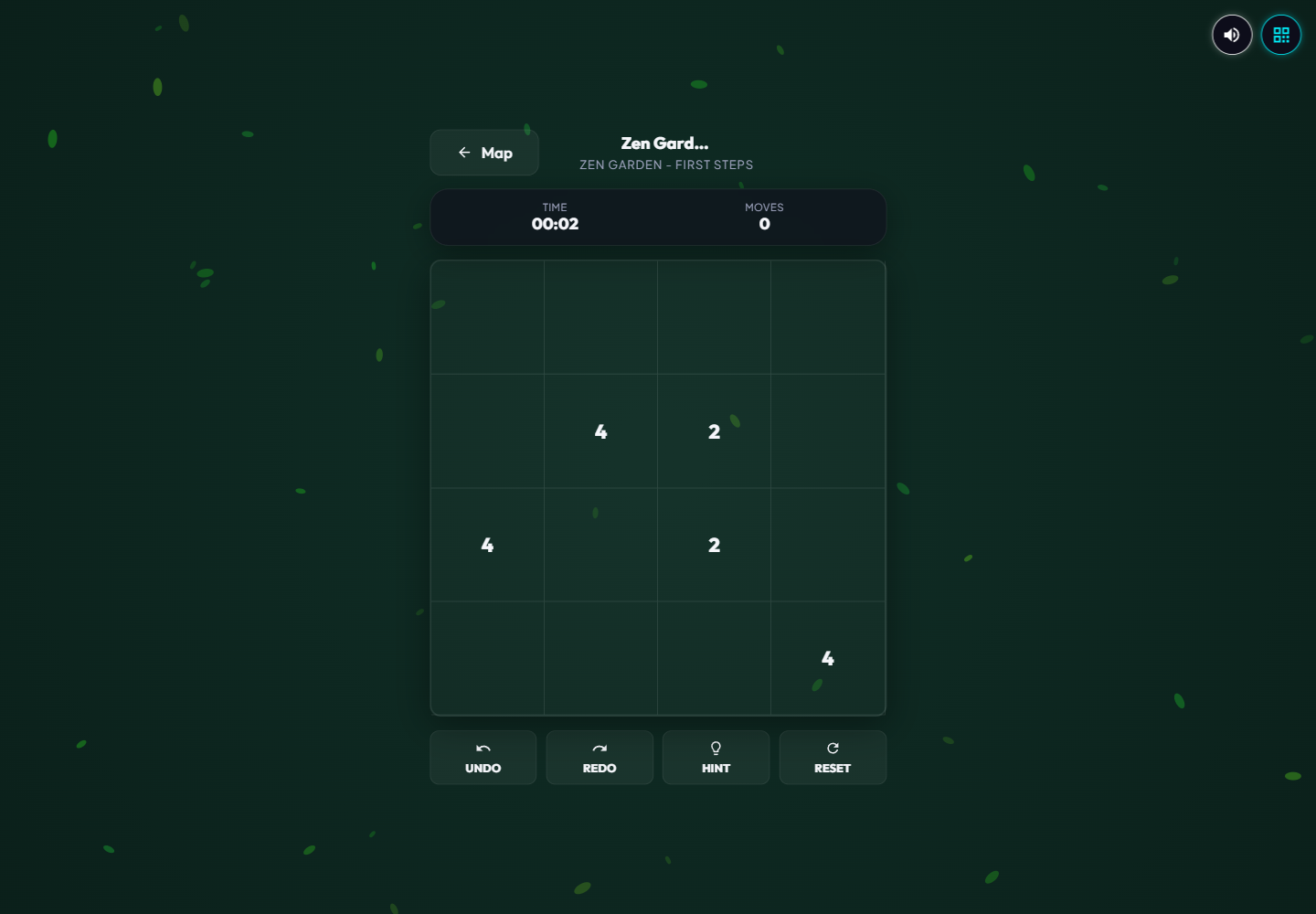
Each board is a numbered grid to divide into rectangles and squares, with a level set that moves from short grids to denser ones. A solo puzzle can be started without an account.
Battles and rankings
A 1v1 arena matches two players on the same board in real time, and ELO ratings record the result. An account is what unlocks matchmaking, the leaderboard and QR sharing to another device.
Our delivery scope
BytesFX led the complete delivery, from design and development to integration and deployment.
- Puzzle board, level set and game rules
- Real-time multiplayer battles over edge functions
- ELO matchmaking and leaderboard storage
- Accounts, QR sharing and session resume
- Static hosting, edge functions and delivery
Workflow
How a session runs
A solo puzzle is a private grid; a battle puts two players on the same board with a result that counts.
Play solo
-
Pick a puzzle
Choose a board from the level set
-
Owner action
Draw the regions
Drag a rectangle around each numbered cell
-
Check the tiling
The board accepts or rejects the solution
Battle another player
-
Owner action
Sign in
An account is needed to be matched
-
Matchmaking
ELO ratings pair the two players
-
Play the board
Both players work on the same puzzle in real time
-
Record the result
The winner's rating moves up
Follow the arrows within each workflow. Steps marked “Owner action” retain a human decision or action.